

About Us
Since 2014, Access Ventures has been on the forefront of innovation focused on human flourishing.
By aligning investments and values, we seek to empower change at scale. Our Reconstruct Challenge program leverages the experiences of our core team and key partners to put people at the heart of lasting and transformative change.
For each challenge, we work with local partners to gather authentic and meaningful engagement from community members, industry partners, academia, and entrepreneurs to create space for pilots and programs.

Our Team
-
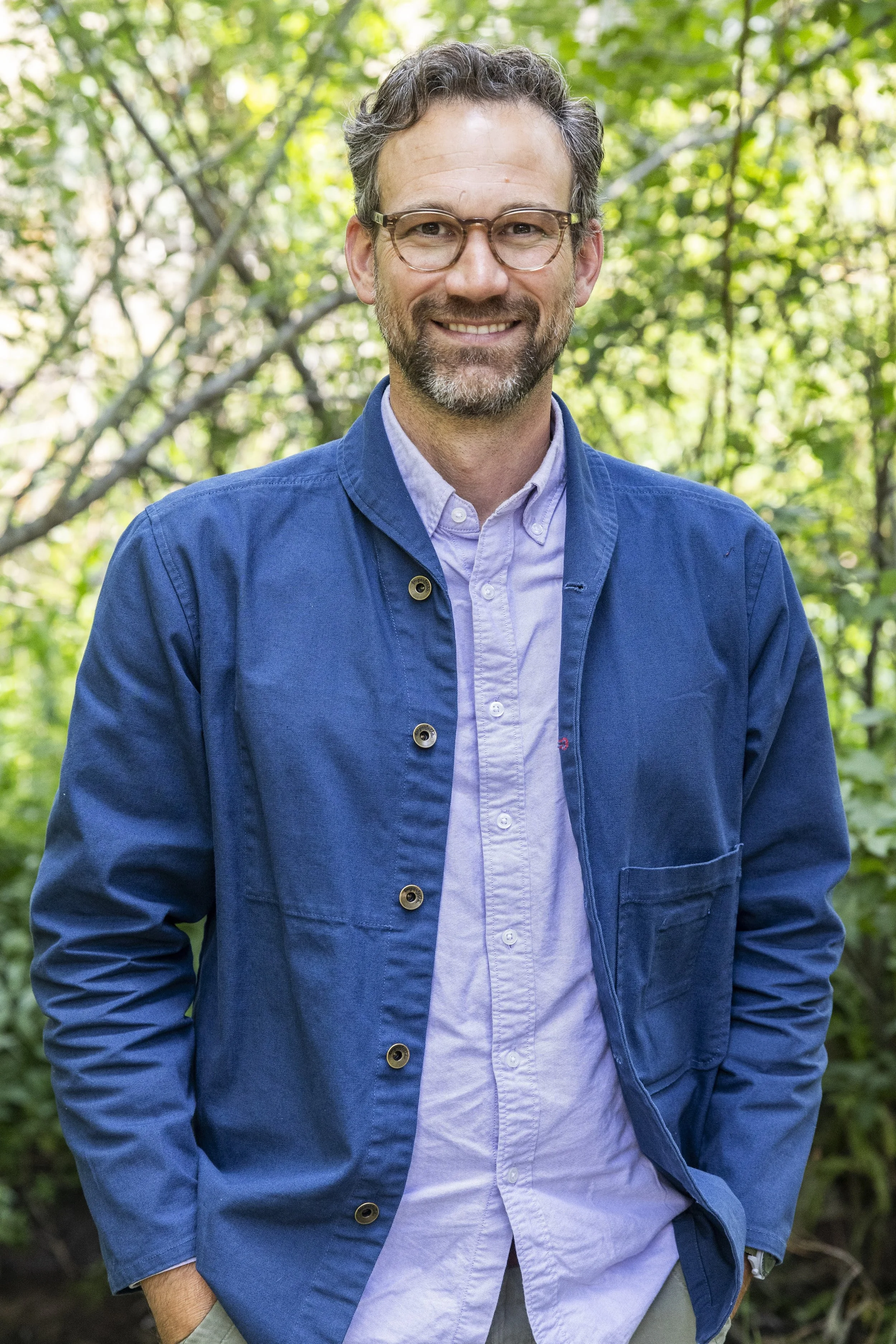
Bryce Butler
Strategy
-

TJ Abood
Investments
-

Ben Reno-Weber
Partnerships
-

Abigail Cheek
Project Management
-

Crystal Esquivel
Operations
FAQs
What is the Reconstruct Challenge?
1
The Reconstruct Challenge is a reverse pitch built to move breakthrough solutions all the way to market adoption. Instead of asking innovators to guess what funders want, we start with a real, pressing problem and invite solvers from across the country to show us how they'd meet it. The best solutions rarely come from the best-funded players but they come from people who understand a problem's systemic barriers firsthand. We find those people and fund them across the gap most never clear: from first-dollar capital to test an idea, to last-mile capital that carries a proven solution into the market.
What is a "reverse pitch"?
2
In a traditional pitch, an entrepreneur brings an idea and looks for a problem (and a check) to match it. We flip that. We bring a clearly defined challenge grounded in community input and research, and ask innovators to pitch us on how they'd solve it. This keeps the focus on outcomes that matter, not on whoever has the slickest deck.
Who should apply?
3
Innovators, entrepreneurs, nonprofits, and teams with a credible approach to the challenge we've put forward, especially those with lived experience of the problem. We prioritize people who understand a problem deeply, because they tend to spot solutions everyone else overlooks.
What challenges does the program focus on?
4
Each round centers on a specific, cause-aligned problem statement drawn from the real bottlenecks our partners face in scaling their impact. We're looking for the best solution wherever it lives.
How does the Challenge work? (The phases)
5
What do selected innovators receive?
6
How will my application be evaluated?
7
In Phase 1, we look at all four:
8
Impact — Does your proposal appear to achieve impact? We want real, measurable benefit, not just activity.
Feasibility — Does your team have the experience and knowledge to deliver, and is your budget reasonable and well-justified?
Scalability — Can this grow? We're looking for solutions positioned for expansive, even exponential, impact rather than one-off wins.
Enduring — Is it innovative, effective, and a fit for its market? Can it endure beyond the program, ideally with follow-on partners or funding already identified or secured?
By this stage we assume impact and feasibility are proven and that you've shown the solution works and that you can deliver it. The question that decides Phase 2 is whether it can scale and endure.
Reviewers also weigh whether they'd personally invest, and share both critical and constructive feedback.
The goal is market adoption and a solution that stands on its own and is taken up at scale. Phase 2's last-mile capital is meant to close the final gap and position strong finishers for follow-on funding and partnerships that carry the work into the market.
Because we fund like venture investors but measure our returns in impact, not dollars. Traditional grants tend to back what's already proven and safe. Venture philanthropy does the opposite: it puts catalytic, first-dollar capital behind unproven ideas, stages that funding against real milestones, and stays in through the risky middle — the last mile — until a solution can stand on its own in the market. The "exit" we're after isn't a payout; it's market adoption. That's the nature of the model, and it's exactly why the Challenge is built in phases.
The Reconstruct Challenge is Access Ventures' venture philanthropy model, Access Ventures anchors each challenge with catalytic, first-dollar capital to bring others to the table.
In Phase 2, we focus intently on scalability and sustainability.
9
What happens after Phase 2?
10
Why do we call this venture philanthropy?
11
Who is behind the Reconstruct Challenge?
12
The Challenge runs in two phases that de-risk the work for both innovators and partners:
Phase 1 — First-dollar capital. This is the money that's hardest to raise: the early, catalytic dollars to test your innovation and prove it works against defined impact targets.
Phase 2 — Last-mile capital. For innovations that prove out, Phase 2 closes the funding gap — the final push to carry a working solution to scale and lasting sustainability.
Paid pilots grounded in community input, research, and mentoring and designed to reduce risk and give your solution a real shot at working.
We evaluate on four criteria but what we weight most shifts between phases.